
Choosing a portable instrument changes everything. For traveling musicians, this instrument offers a practical way to play without the bulk of a standard model.
You need to weigh the compromises. The smaller size makes transport easier, but it can affect sound projection. Understanding these choices helps avoid unpleasant surprises on the road.
This article presents the common formats, from 3/4 models to folding models, including silent and carbon versions. Sylvain Peter, a specialist writer, emphasizes the importance of choosing well in order to travel with peace of mind.
Objective: to give you concrete reference points for assessing each option. By the end, you will know which balance between portability and sound quality best suits your needs.
Why choose a travel guitar?
Taking a compact version with you lets you play anywhere, from the trunk of a car to the stage. For traveling musicians, a smaller instrument protects the main instrument during frequent trips. It also makes travel by plane or car easier.
The Yamaha brand popularized the guitalele, a format that has become a benchmark among miniature models. Professional guitarists adopt these formats for their practicality and their stage sound.
The built-in amplification system allows some models to compete with larger formats, such as dreadnoughts. The value for money is often attractive for a range designed for travel.
Finally, the compact size makes it easier to slip the instrument into a bag or under a seat. This choice reduces the risk of accidents and lets you keep a good sound without overloading your back.
Travel acoustic guitar: advantages and limitations
A smaller format changes the playing experience on the neck without necessarily sacrificing dynamics.
The benefits for the musician
The shorter scale length reduces string tension. Playing becomes more fluid, especially for fast chords and bends.
The small footprint makes it easier to carry in a bag or on a plane. Guitarists gain mobility for the stage, rehearsals or vacations.
The sound compromises
The smaller body reduces bass projection. The sound tends toward a brighter, drier tone, with fewer harmonics than a large body.
However, some models remain dynamic: the Martin LX1, popularized by Ed Sheeran, is a good example on stage.
Practical tip: playing facing a wall strengthens the reverberation and partly compensates for the lack of body.
| Criterion | Compact guitar | Standard model | Impact for the musician |
|---|---|---|---|
| Scale length | Shorter (easy playability) | Standard (classic tension) | Better handling vs familiarity |
| Body | Small (limited bass) | Large (rich harmonics) | Reduced projection vs sound presence |
| Transport | Easy (bag, plane) | Restrictive (hard case) | Greater mobility vs protection |
The constraints of transporting a standard instrument
A standard instrument creates logistical constraints that weigh on the musician during travel.
Cabin size and restrictions. TGV INOUI trains limit luggage to 85 x 55 x 35 cm, which often makes it impossible to bring a 4/4 guitar into the cabin without taking precautions.
Risks linked to hold handling. Airlines such as Air Canada have reported structural damage after rough loading in the hold. Wood suffers from impacts and poorly distributed tension.
The risks of breakage and humidity
At sea, changes in humidity can twist a guitar neck and irreversibly affect its playability.
Leaving an instrument in the trunk of a car in full sun can dry out the wood and deform the soundboard.
- A padded gig bag protects it, but does not insulate it from violent impacts.
- A sturdy backpack helps for short trips, but not for airport handling.
| Risk | Cause | Solution |
|---|---|---|
| Structural impact | Handling in the hold | Cabin transport or hard case |
| Humidity-related deterioration | Sea/port variations | Humidity control and a tightly closed case |
| Heat deformation | Heat in a car | Do not leave it in the trunk; keep it in the cabin |
The guitalele phenomenon
The guitalele is a hybrid instrument: a contraction of guitar and ukulele, with six strings.
It is tuned two and a half steps higher than a standard guitar, giving it a very bright register.
The Yamaha GL-1 remains the historic reference, with the term protected by the brand.
Its miniature format means a very small body. The sound becomes bright and close to that of a ukulele, ideal for playing on the move.
This format sometimes requires more dexterity, especially for musicians with large hands. The short neck changes chord grip and finger positions.
Practical advantage: these models are compact for travel and affordable, perfect for introducing children to the guitar.
Dedicated travel guitars
Models designed specifically for travel often favor a minimalist frame and compact tuners.

Specific design
The Martin Backpacker, created in the 1990s, illustrates this approach with a V-shaped body. This shape reduces volume while still offering decent handling on stage.
Shortened headstocks and lightweight tuners limit bulk for transport. Installing a piezo pickup often turns the model into an electro-acoustic.
Ergonomic limitations
The compromise becomes most apparent when playing seated. The small size makes positioning on the leg more difficult, often making a strap necessary.
The sound can sometimes lean toward a banjo-like color, with less bass. For some players, this character remains an asset, especially for amplified blues-country.
- Reduced format = easy transport in a bag.
- Short neck = more compact playing, less room for wide chords.
- Variable price depending on the brand and range.
Small reduced-format guitars
Reduced formats cover a wide range, from 1/8 to 3/4, and appeal through their immediate comfort.
These models often offer a more balanced sound than an instrument designed specifically for transport. The Baby Taylor and Little Martin LX1 are popular references for their versatility.
On stage, several professionals validate this choice. Ed Sheeran mostly uses 3/4 models, proof that size does not prevent live performance.
A solid Sitka spruce or red cedar top strengthens sound quality and durability. The compact body retains good projection when the top is well made.
- Comfort: short neck, easier playing for tight chords.
- Use: excellent backup guitar for rehearsals or travel.
- Transport: fits better in a bag or gig bag and relieves the back.
The elegance and compactness of Parlor models
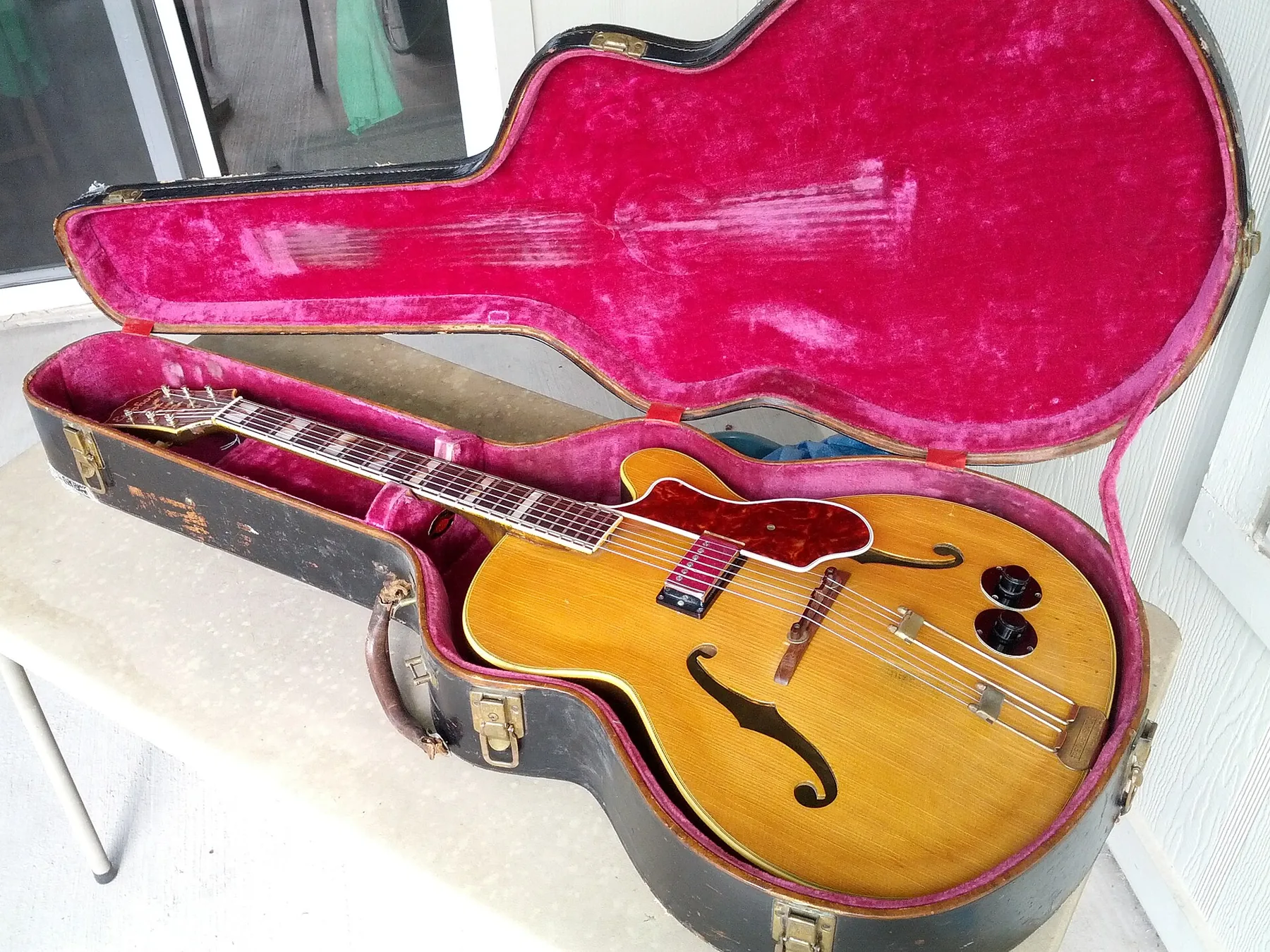
Compact and elegant, Parlor guitars offer surprising presence on a small stage.
These instruments, popular at the end of the 19th century, are coming back into fashion thanks to their vintage tone and reduced format. The short 12-fret neck makes playing easier for blues enthusiasts and light travel.
Artists such as Bob Dylan and Joan Baez contributed to their reputation. In 2013, a musician even played “Space Oddity” aboard the International Space Station on a Parlor, proof of their portability.
Brands such as Washburn and Yamaha offer models with a retro look. The compact body and well-crafted top provide attractive value for money for anyone looking for a good travel guitar without sacrificing style.
“The Parlor format favors intimate expressiveness over massive projection.”
- Short neck = comfort for tight chords.
- Reduced body = easy transport in a bag or gig bag.
- Ideal for acoustic stages and solo sessions.
Technology in the service of Silent Guitars
Silent models turn nighttime practice into a clean and discreet experience.
The Yamaha Silent Guitar removes the resonating body. You can play through headphones without disturbing anyone in a hotel room.
The Aria Sinsonido AS100C takes a different approach: removable wooden parts recreate a body when desired. This hybrid format gives the musician more flexibility.
These models include electronic effects to refine the sound in rehearsal situations. They are well suited to private sessions, quick recordings or long trips.
Points to consider:
- The experimental look may bother purists.
- Using headphones is often necessary to practice without causing disturbance.
- Plugged into a PA system, some models can deliver a very realistic acoustic result.
In short, these models offer a modern solution for anyone seeking mobility, silence and quality while traveling.
The ingenuity of folding guitars
Modern engineering now makes it possible to obtain an ultra-compact format while keeping a playing feel close to that of a standard instrument.
The Voyage-Air illustrates this idea: its neck folds against the body, which greatly facilitates transport. Once unfolded, the neck stability and top quality offer surprisingly good playability for this format.
These models remain rare, because the price often exceeds 800 euros. Quick assembly is a real advantage for tours or short trips.
Warning: string tension must be released or properly managed before folding. Otherwise, the hinges and system may suffer.
- Advantage: compact once stored, it fits in a bag.
- Practical limitation: the gig bag may still be bulky in the cabin.
To compare the options and find the best travel guitar, weigh quality, price and ease of transport.
The technical criteria for choosing well
Construction details directly influence tuning stability and tone on the road.
Choice of woods
A Sitka spruce or red cedar top changes everything. Solid woods provide lifespan and harmonic richness. For a compact body, favor a solid top over a cheap laminated top.
The importance of scale length
A shorter scale length reduces string tension. Playing becomes easier for beginners and children.
On a compact model, maintaining optimal playability prevents frustration for the traveling musician.
The amplification system
For the stage or recording, a good preamp makes the difference. Systems such as the Taylor Expression System 2 offer a faithful and stable sound.
| Criterion | Advantage | Watch out for |
|---|---|---|
| Wood | Richness, longevity | Avoid tops that are too thin |
| Scale length | Playing comfort | Possible loss of projection |
| System | Reliability live | Quality varies by brand |
To compare models and find the best option, see our selection and reviews.
Alternatives for traveling musicians
The options for traveling guitarists go well beyond simply choosing a compact model. Renting an instrument locally avoids the constraints of plane or train travel. It is practical for short stays or light tours.
Buying a new guitar locally remains expensive, but it brings peace of mind to musicians who refuse to risk their main instrument. Some brands, such as the Mogi One, offer opening bodies for storing personal belongings inside the body.
Shipping a guitar by post after removing the neck is a technique used by touring professionals. This method reduces risks during transport by car or plane.
- Rental: flexible solution, no maintenance on site.
- Local purchase: fast, but a high investment.
- Disassembled shipping: secure for long tours.
- Useful body: clever storage for vacations.
To choose the best option for your needs, read our guide Which instrument should you choose?. It helps compare practicality, cost and quality before any trip.
Tips for protecting your instrument while traveling
Before every departure, a few simple habits limit the risks to your instrument.
Loosen the strings slightly if you are flying: this reduces tension on the headstock and helps prevent breaks.
Choose a hard gig bag or reinforced transport case for trips in the hold. These protections absorb impacts better than a simple soft gig bag.
Monitor humidity during long journeys. Humidity control prevents the neck wood from warping, especially in extreme climates.
Never leave the instrument in a car in the sun. Heat can damage the finish and structure in just a few hours.
For walks and hikes, choose a dedicated backpack: it frees your hands and distributes the weight without crushing the body.
| Action | When | Benefit |
|---|---|---|
| Loosen the strings | Before a flight | Less tension on the headstock |
| Hard gig bag or reinforced case | Transport in the hold | Protection against impacts |
| Humidity control | Extreme climates | Preserves wood stability |
| Dedicated backpack | Excursions | Mobility and comfort |
To learn more about the value of good protection, see our guide on the benefits of gig bags and cases.
Conclusion
In summary, a thoughtful choice makes it possible to combine mobility with satisfactory sound stability. Choosing a suitable instrument helps reconcile musical passion with logistical constraints.
This article has presented a variety of options, from guitaleles to folding models, to guide every type of musician. Construction and material quality remain crucial for good durability over time.
Investing in a well-made model lets you explore your creativity anywhere, without sacrificing playing comfort. Test several instruments before buying and prioritize robustness.
We hope these tips will make choosing your travel guitar easier and accompany you on your next musical adventures.
Leave a Reply