
Start with the right mood: put on your favorite Beatles track in the background as you discover your new instrument. This small ritual makes practice feel enjoyable and helps you stay motivated before each session.
This short guide helps you choose a first model that fits your style. A steel-string guitar with a comfortable neck gives you a powerful sound for playing popular songs.
We cover the clear steps for starting guitar: choosing the right instrument, learning basic chords, building your first techniques, and following a level-by-level progress plan. Within a few weeks, you should be able to accompany your favorite songs.
If you are still unsure, follow this beginner guitar guide, which explains models, presentation videos, and tips for avoiding classic mistakes. The idea is simple: take your time and keep the pleasure of playing.
Why choose a folk guitar as a beginner
Choosing a folk guitar gives you quick access to a broad repertoire and to the enjoyment of playing. This type of instrument covers around 40% of modern music styles, based on the common split between folk, electric, and classical guitar.
The folk guitar offers a good balance between the sound of an acoustic guitar and the power of an electric. It allows simple chord changes and recognizable accompaniment patterns from the first few weeks.
For anyone hesitating between several types, this choice makes learning more rewarding. Immediate enjoyment encourages regular practice and steady progress.
- Versatility: ideal for exploring many styles.
- Accessibility: simple chords and rhythms are easy to memorize.
- Progression: makes it easy to move toward an electric or classical model later, depending on your goals.
| Criterion | Folk | Electric |
|---|---|---|
| Versatility | High (40% of styles) | More specialized for rock/blues |
| Immediate enjoyment | Strong | Less intuitive without an amp |
| Development | Easy transition toward other styles | Ideal for rock and stage playing |
To go further in your choice and compare models, read this detailed guide, which helps you select the right instrument for your budget and goals.
Folk guitar: how to start well without making the wrong choice
Choosing the right instrument shapes the way you learn.
The versatility of a steel-string instrument makes many styles easier to access. Its bright tone lets you accompany chanson, pop, or rock without changing instruments.
The narrower neck helps guitarists place their fingers and move between chords quickly. Steel-string tension takes a little adjustment, but it speeds up progress once your hands adapt.

The benefits of versatility
Being able to switch styles makes each lesson more motivating. Practice can move from simple strumming to more technical fingerpicking.
Differences from the classical guitar
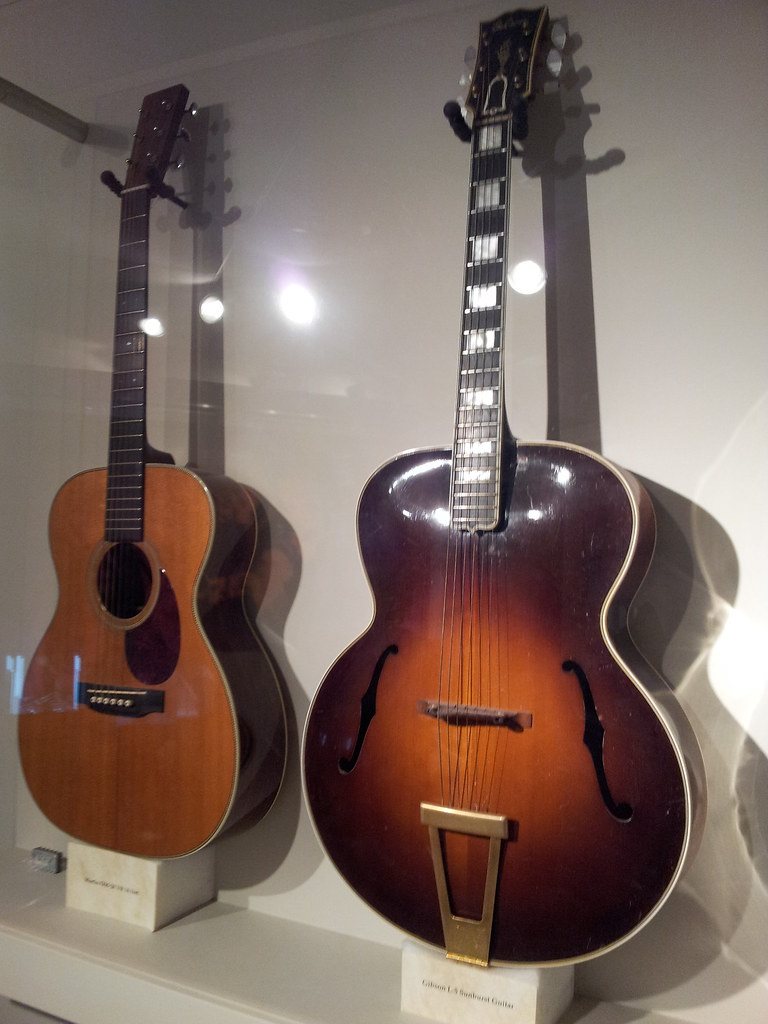
The main difference is in the construction: steel strings and the body give the folk guitar more projection. The electric guitar does not have the same resonating body and relies on an amplifier for its sound.
| Feature | Steel-string instrument | Classical guitar |
|---|---|---|
| Strings | Steel – bright sound | Nylon – warm sound |
| Neck | Narrower – easier chord access | Wider – different finger position |
| Progress | Speeds up chord learning | Ideal for classical technique |
To compare models and choices, read our analysis on folk or classical guitar, then continue through this article for the selection criteria.
The essential criteria for choosing your first instrument
Choosing your first instrument comes down to a few practical and ergonomic criteria. A suitable model helps you stay motivated and progress during your first lessons.
Why setup by a luthier matters
Having your instrument checked by a luthier is often worth the investment: 20 to 30 euros can be enough for a setup that noticeably improves playing comfort.
A good setup lowers the string action and helps prevent finger pain. Steel strings need particular attention to guarantee comfortable playability.
Consider your body shape and hand comfort: a classical guitar neck is wider, which may suit some beginners but discourage others.
- An electric guitar requires an amp budget; factor that in before buying.
- Taking time to compare models with a buying guide is an excellent idea.
- A professional setup can turn an entry-level model into an instrument that feels pleasant every day.
Adopting the right playing posture
A stable posture changes everything for playing quality and the musician’s health.
Place the instrument on your right thigh if you are right-handed so you can play comfortably. This position, common among folk guitarists, makes strumming and string control easier.
The neck position should give you clear access to every fret. Keep your elbow slightly away from your body to free the wrist and protect your fingers.

To play standing up, use a strap. When seated, a footstool can stabilize the instrument and improve the neck angle.
| Situation | Advantage | Tip |
|---|---|---|
| Seated on the thigh | Stability | Use a footstool if needed |
| Standing with a strap | Mobility | Adjust the height to keep your back straight |
| Classical guitar | Optimized neck position | Turn the shoulders slightly |
- Keep your body aligned with the neck to protect your back.
- Adjust the height to make left-hand work on the neck easier.
- Take time to find a stable position: it is the foundation for calm, steady progress.
Mastering basic chords to make progress
Basic chords are the key to turning simple movements into real songs.
Master C, D, E, G, and A: these open positions form the basis of many songs. Watch Cyrille’s video to see finger placement on the neck and strings.
Following a structured guitar course helps you avoid common mistakes. Practice 10 to 20 minutes a day to strengthen your fingers and gain clarity.
- Start with open chords, then move to barre chords when your level allows.
- The folk guitar offers a rich resonance that lets you hear each chord clearly.
- Online lessons make it easier to exchange ideas and keep the pleasure of music alive.
| Action | Recommended duration | Goal |
|---|---|---|
| Chord exercises | 10-20 min/day | Clarity and position memory |
| Watching Cyrille’s video | 1 analysis session | Finger placement on the neck |
| Structured course | 1 to 2 times per week | Guided progress toward barre chords |
To go further with chord learning, read our guide to learning chords and progress with a clear method.
Learning pick and fingerstyle playing techniques
Right-hand techniques, whether pick or fingers, define your sound and playing comfort. They let you accompany varied songs and refine your style.
Fingerpicking
Fingerpicking lets you play melody and accompaniment at the same time. Marcel Dadi played a major role in popularizing it.
Tommy Emmanuel shows how fingerstyle playing can turn a simple guitar into a one-person orchestra.
Strumming
Strumming develops the rhythm and energy of a song. Use a pick to create dynamic patterns.
Work on simple patterns first, then make them more complex to improve your level and follow suitable lessons.
Reading tablature
Reading tablature opens up a large repertoire of songs. It shows which strings and frets to play.
- Watch a Marcel Dadi video as an example of technique combined with musicality.
- Alternate between pick and fingers to find your personal balance.
- The next stage of your learning will involve mastering strumming patterns and arpeggios.
Exploring modern percussive sounds
Modern percussive techniques turn the guitar body into a real acoustic drum kit.
Andy McKee changed acoustic guitar with “Drifting”, combining slap and tapping to create percussive sounds. John Butler and Marcin also show how a folk instrument can become both virtuosic and rhythmic.

Exploring these gestures lets you add a rock or pop touch to your songs. Tapping requires very strong control of the neck and strings, but it offers endless melodic and rhythmic possibilities.
- Innovation: melody and percussion on a single body.
- Variety: makes your songs feel more alive.
- Accessibility: the folk guitar produces natural sounds, while the electric guitar often depends on effects.
Tip: study video examples and progress step by step. Mastery takes time, but it is a motivating journey for any curious guitarist.
Maintaining your instrument so it lasts
Regular maintenance extends your instrument’s life and preserves its tone. Get into the habit of wiping the strings after every session to reduce oxidation.
Change the strings regularly: they affect sound clarity and make finger placement easier. Also check the neck every few months, especially in humid conditions.
Store your instrument in a suitable case to protect it from impacts and temperature changes. Good storage reduces the need for adjustments and saves time.
- Cleaning: wipe down after every use.
- Checking: inspect the neck and top periodically.
- Prevention: use a case and humidifier if needed.
Follow a maintenance guide for detailed steps. By consulting a professional, you invest in your enjoyment and in the lifespan of your instrument.
Avoiding classic beginner guitar mistakes
Finger pain worries many beginners, but it often fades with a little practice. Allow around 15 days of regular sessions for calluses to form on your fingertips.
Do not force it during the first few weeks. Playing in short 10- to 20-minute sessions protects your fingers and keeps music enjoyable.
Managing finger pain
- Avoid gripping the strings too hard: press only enough for the notes to ring clearly.
- The acoustic guitar and folk guitar require more effort than the classical guitar, but they gradually strengthen the hand.
- If pain persists, take a break and check your thumb position and shoulder tension.
- Following suitable lessons helps correct posture and avoid mistakes that slow progress.
| Case | Impact | Solution |
|---|---|---|
| Pressing the strings too hard | Pain and muted notes | Reduce pressure, work on chords |
| Thumb too high on the neck | Wrist tension | Place the thumb in the center of the back of the neck |
| Sessions too long | Fatigue and injury | 10-20 min per session, frequent breaks |
By avoiding these traps, you will progress faster and enjoy playing guitar. Patience remains the best ally of beginner guitarists.
Conclusion
This conclusion summarizes the keys to turning curiosity into regular practice.
The folk guitar remains a versatile and rewarding choice for starting guitar and exploring many styles. With this guide, you have the advice you need to choose a good instrument and master the basics.
Stay motivated: the pleasure of playing is the main engine of your progress. Make the most of lessons and exchanges with other musicians to structure your learning.
To avoid frequent mistakes, also read this practical article on common pitfalls and get started. Enjoy playing, and good luck on your guitar-learning journey!
Leave a Reply