
Preparing your instrument to play standing up takes more than a simple accessory. A good strap changes your comfort, your posture, and the way you reach the neck.
Choosing the right guitar strap means thinking carefully about playing position. A strap set too low or too high can create tension in your back and shoulders.
Here are practical tips for choosing a sturdy guitar strap and attaching it without damaging the finish. If your instrument has only one strap button, there are simple, secure solutions.
Why use a strap for your folk guitar
Playing your instrument standing up changes the way you perform. A good guitar strap frees your hands and helps you adopt a more dynamic playing position. Musicians who move around on stage rely on it.
Electric guitars and basses can weigh more than 4 kg. The right accessory spreads the weight across the shoulder and reduces fatigue during long sessions. It also helps prevent accidental drops that can damage valuable instruments.
Your choice also affects your style: pattern, material, and width all contribute to the look of a performance. For a guitarist, investing in a quality strap means protecting the instrument while gaining freedom of movement.
“A secure attachment turns a simple support into a real playing partner.”
- Weight support
- Stability while moving
- Long-lasting comfort
Folk guitar strap: how to choose and install it
Start by testing the strength of the ends: these points take the most tension when you move. A weak attachment can slip loose and cause accidents.
Check the quality of the materials. Nylon is very durable, but it can slide if the finish lacks grip. Higher-end straps often combine nylon with leather reinforcements for both strength and hold.
Inspect the stitching and rivets. Reinforced ends extend the life of your setup. A good strap also reduces fatigue during long playing sessions.

- Test the strength of the buckles and eyelets.
- Choose leather reinforcements at the anchor points.
- Make sure there are no sharp edges that could damage the varnish.
Installation: pay close attention to the attachment points and test them again after a few minutes of playing.
“The build quality of a strap directly affects the safety of your instrument.”
Key criteria for choosing your accessory
To play for a long time without pain, a few factors are essential. Width, length, and material directly affect comfort and how securely your guitar sits. Choosing carefully helps prevent shoulder and back tension.
Width and comfort
Standard models usually measure between 5 and 8 cm. A wider strap spreads the weight more effectively and reduces pressure on the shoulder.
A good strap should be comfortable, especially if you play standing up for several hours. Leather straps often offer better hold, but the price is higher.
Why length matters
The length should be adjusted so the guitar sits at the right height for your playing style. Poor adjustment gets in the way of your technique and causes fatigue.
“Comfort remains the most important factor for any guitarist.”
| Parameter | Recommendation | Impact |
|---|---|---|
| Width | 5-8 cm | Weight distribution, shoulder comfort |
| Material | Leather or reinforced nylon | Durability, hold |
| Length | Precisely adjustable | Playing position, access to the neck |
Choosing materials according to your use
Depending on how you play, some materials will offer more durability while others prioritize comfort.

Leather remains an excellent choice for longevity and style. A quality leather strap should be maintained over time so it keeps its flexibility under the weight of the guitar.
Nylon is strong and affordable. It suits tighter budgets, though it can sometimes slide on the shoulder if your instrument is heavy.
“For long playing sessions, choose a material that balances grip and comfort.”
- Suede improves grip when you perspire.
- A nylon-cotton blend offers very good comfort for long sessions.
- Polypropylene is durable and often more eco-conscious.
| Material | Advantage | Drawback |
|---|---|---|
| Leather | Durability, appearance | Price, maintenance |
| Nylon | Affordable, strong | Can slide |
| Blend (nylon + cotton) | Long-lasting comfort | Less formal look |
In short: compare price and quality according to how you play, so you can choose a strap suited to your playing time and style.
Attachment methods for guitars with two strap buttons
With two anchor points, installation is quick. Simply fit the strap holes over the buttons placed at both ends of the body of your instrument.
This method is standard on most electric guitars and basses. It provides a stable, secure position for playing standing up.
Check that the buttons are tightly screwed in before every session. A loose screw can cause a fall and damage your guitar in seconds.
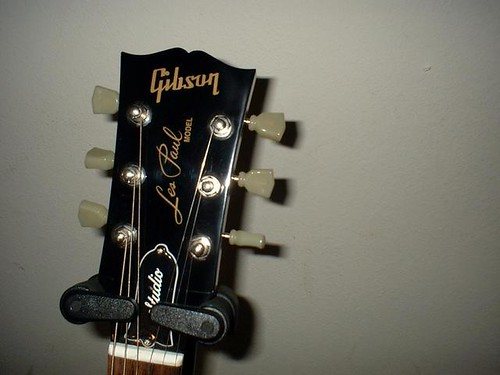
A secure setup lets the guitarist move freely without worrying about the instrument. Most modern instruments have these two anchor points, making it easy to use your favorite straps.
- Fit the holes over the buttons at both ends.
- Tighten the screws again if needed for a better hold.
- Check the condition of the attachment points regularly to prevent wear.
“A solid attachment is the first guarantee of confidence on stage.”
Solutions for instruments with only one strap button
When your instrument has only one anchor point, several simple options can keep it secure on stage.
Using a cord
Classic and quick, the cord ties around the neck just behind the headstock. It is an inexpensive, immediate solution.
Advantage: practical for rehearsals or occasional use. Drawback: less secure than a fixed system.
The strap button adapter
A leather strap button adapter attaches behind the nut and costs around EUR10.
It is an elegant option that provides more hold than a simple cord. It suits guitarists looking for a compromise between style and security.
Installing a second strap button
The safest method is still to install a second strap button. This involves drilling into the body, but it completely stabilizes the strap.
Expect to pay up to around EUR20 with a professional luthier. Many musicians prefer to entrust this job to a professional for a clean, lasting result.
“Investing in a reliable attachment helps prevent costly drops and protects your instrument.”
- Cord: a temporary, affordable solution.
- Leather adapter (around EUR10): elegant and more secure.
- Second strap button (around EUR20 with a pro): maximum security.
- Always add a locking system to prevent accidental release.
- Ideal temporary use for rehearsals or performances without modification.
- Comfort is reduced because the weight is not distributed as it is with strap buttons.
- For a more stable playing position, consider adding a second strap button through a luthier.
- Check the tightness regularly to prevent vibration from loosening the hardware.
- Choose leather or nylon straps fitted with locks for greater peace of mind.
- A good system should be easy to handle on stage and secure in every situation.
Installing a strap on a guitar with no strap buttons
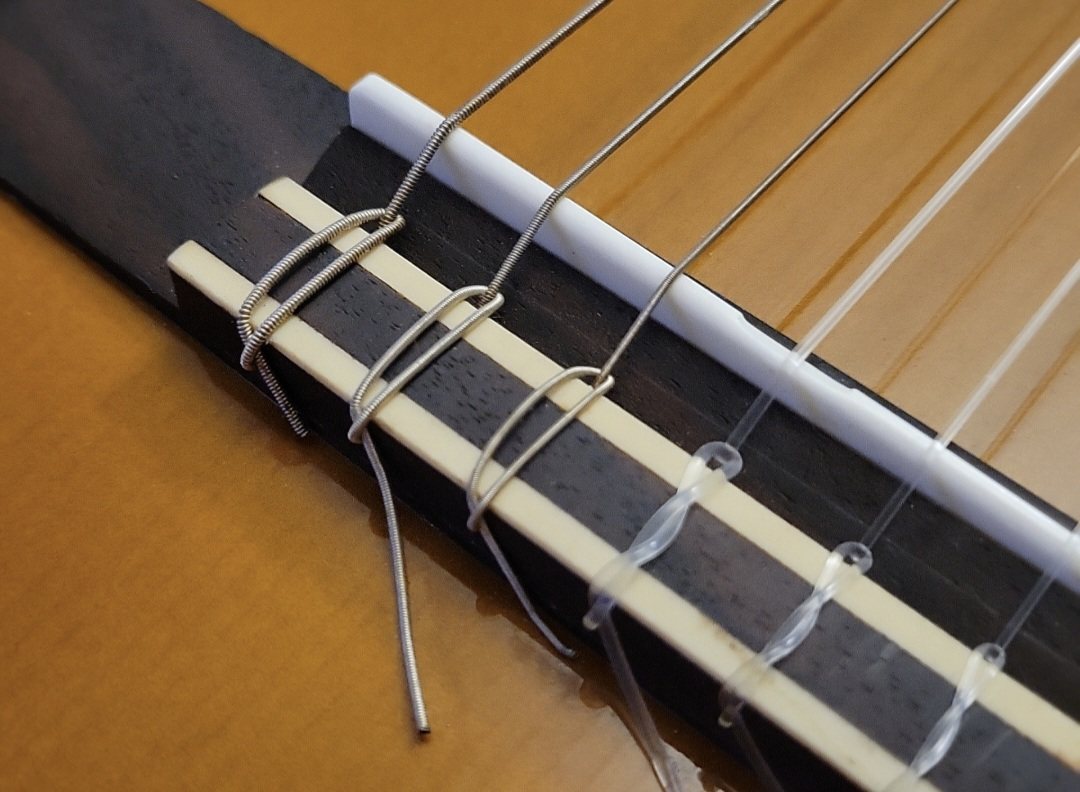
Adding a strap to a classical guitar with no buttons is often done with an attachment that hooks at the soundhole. This type of setup avoids drilling into the body, but it requires care.
The classical guitar strap
Advantage: this solution is quick and reversible. It lets you use a guitar strap without permanently modifying your instrument.
Drawback: the hold is less stable. You often need to keep one hand on the guitar to prevent it from tipping forward.
To protect the varnish, choose leather or nylon models designed for classical guitars. Make sure the surface that touches the soundhole is soft and non-abrasive.
"This solution preserves the integrity of the instrument while offering a practical way to play standing up.
Securing your instrument with locking systems
Protecting your instrument from falls often starts with a good locking system.
Strap locks prevent the strap from coming loose during a sudden movement. They are essential for any guitarist who plays standing up with an electric guitar or bass.
An affordable option is Fender-style rubber strap blocks. They fit quickly over existing strap buttons and provide extra hold at a low price.
For a more robust locking solution, the DiMarzio ClipLock strap is highly regarded. This mechanism ensures the strap stays firmly connected to the guitar in all circumstances.
“A reliable lock prevents accidents and protects your instrument over time.”
Conclusion
In the end, the right accessory improves a musician’s posture and confidence. A good strap increases comfort and protects your instrument while you play.
Your choice depends on style, price, and the level of safety you want. Follow these tips on position to get the best from your new equipment.
Guitarists should prioritize quality to avoid accidents and extend the life of their guitar. Share your experiences or ask questions to help the community.
FAQ
Do you always need a strap to play standing up?
What width is best for comfort?
How do you adjust the length correctly?
Leather or nylon: which material should you choose?
My guitar has only one strap button. What should I do?
Is it risky to drill a second strap button yourself?
What is the best solution for a classical guitar with no strap buttons?
Are strap locking systems worth the investment?
How can you stop a strap from damaging the finish or varnish?
What budget should you plan for a good strap?
Can a strap compensate for a heavy instrument?
Are quick-release attachments easy to install?
How do you choose a style that suits your instrument?
Can you use the same strap on a bass and a guitar?
Useful references
Related Mountain Men guides
Best Beginner Folk Guitar: Key Criteria to Know
Leave a Reply