
Starting an instrument should feel simple, clear, and motivating. On October 16, 2025, many new musicians began their journey by looking for the right first guitar. This introduction helps you make a confident first choice.
This practical guide helps beginners identify a model that fits their body shape, playing goals, and musical taste. We cover the essentials: neck comfort, body size, string action, and soundboard type.
Choosing the right acoustic guitar prevents early frustration and makes practice more rewarding. Trying several body shapes, such as Dreadnought, Concert, and OM, is still the best way to understand what feels right.
For more options, read this beginner acoustic guitar selection and find a first instrument that makes you want to keep improving every day.
Understanding What Makes a Folk Guitar Different
A folk guitar stands out because of its construction, string type, and versatile sound. These features directly affect how you play, learn, and progress.
Key differences from a classical guitar
Strings and Projection
The main difference is the use of steel strings. They create a brighter tone and stronger projection than nylon strings.
Steel-string tension gives the soundboard more response and produces a more present sound. This works especially well for singing accompaniment, strumming, and solo passages.
Why beginners are drawn to this format
Neck, Body Shape, and Playing Comfort
The neck is often narrower, which can make chord shapes easier to form. The body is designed for a rich, flexible sound that suits many styles.
Blues, rock, pop, country, and singer-songwriter styles all benefit from this brightness. Steel strings take a few sessions to get used to, but comfort usually improves quickly with regular practice.
“A good folk guitar has presence and makes you want to practise.”
Investing in a well-built instrument gives you better tuning stability and a smoother learning curve. To compare beginner-friendly choices, read this beginner acoustic guitar buying guide.
Which Folk Guitar Should You Choose to Learn Easily Based on Your Profile?
A good match between body size and player comfort makes starting music much easier.
For smaller players, a Parlor guitar offers a natural hold and immediate comfort. Its reduced body size helps position the arms and makes chords feel more accessible.
Beginners who prefer a compact instrument can also look at Concert models. This format offers a useful balance between tone and easy handling.
If you travel often, a travel guitar can help you keep practising wherever you go. It can be an excellent first folk guitar if portability matters in your routine.
- Consider your body shape and the size of the guitar body.
- Try several models in a shop to feel the neck and resonance.
- A modest budget can still buy quality: look for a reliable affordable range.
“Trying before buying is still the best way to find the instrument that will stay with you.”
| Profile | Recommended Format | Strength | Typical Budget |
|---|---|---|---|
| Smaller player | Parlor | Comfort, easier neck access | $170-$450 |
| Looking for versatility | Concert / OM | Good balance of tone and handling | $220-$650 |
| Travel or mobility | Travel guitar | Portable, practical | $130-$400 |
The Technical Criteria That Matter Most for Playing Comfort
A good setup can completely change comfort and motivation during the first hours of practice.
Why String Action Matters
String action is the distance between the steel strings and the fretboard. It should be low enough to reduce finger fatigue and make chords easier.
Action that is too high on an acoustic guitar can discourage beginners quickly. A professional setup can make the same guitar much more enjoyable to play.
Choosing the Right Body Shape
The size and shape of the body affect both tone and ergonomics.
A Dreadnought offers powerful projection. Concert and Auditorium shapes prioritize comfort and balance, which helps during longer practice sessions.
Neck Quality and Profile
An ideal nut width for many beginners sits around 43 to 45 mm. This helps with chord formation and early playing comfort.
A well-shaped neck, such as the type found on compact Taylor models, can make chord changes feel smoother.
“Well-finished frets and a comfortable profile prevent snags as your hand moves along the neck.”
- Frets: polished for a smooth feel.
- Profile: matched to your hand size for better comfort.
- Format: chosen according to body shape and playing style.
| Criterion | Impact | Recommendation | Action |
|---|---|---|---|
| String action | Chord ease, finger fatigue | Low, but without buzzing | Ask for a setup |
| Body shape | Projection / comfort | Dreadnought for projection, Concert/Auditorium for comfort | Try in store |
| Neck profile and width | Playing fluidity | 43-45 mm at the nut, polished frets | Compare several models |
To compare several models and refine your technical choice, review this guide on how to choose an acoustic guitar.
Best Folk Guitars to Start With
Here is a beginner-focused selection of models and model types that offer reliable playability and a strong price-to-quality balance.
The Fender CD-60S stands out for its solid spruce top and accessible feel. It delivers a rich sound that helps develop your ear and keeps practice sessions motivating.
The Yamaha FG and FX entry-level lines are known for versatility: comfortable necks, dependable tuning, and options for amplified playing without losing clarity.
Compact Dreadnoughts and cutaway acoustic-electrics can also work well if you want stronger projection or easier access to higher notes.
- Ergonomic neck: handling suited to beginner hands.
- Controlled budget: durable quality without excessive cost.
- Varied formats: from travel guitars to larger projection-focused bodies.
“Choosing a guitar that inspires you makes regular practice and steady progress much easier.”
To compare more options, see this first acoustic guitar guide.
Choosing Between an Acoustic and an Electro-Acoustic Model
The choice between a purely acoustic guitar and an electro-acoustic version quickly comes down to stage, recording, and home use.
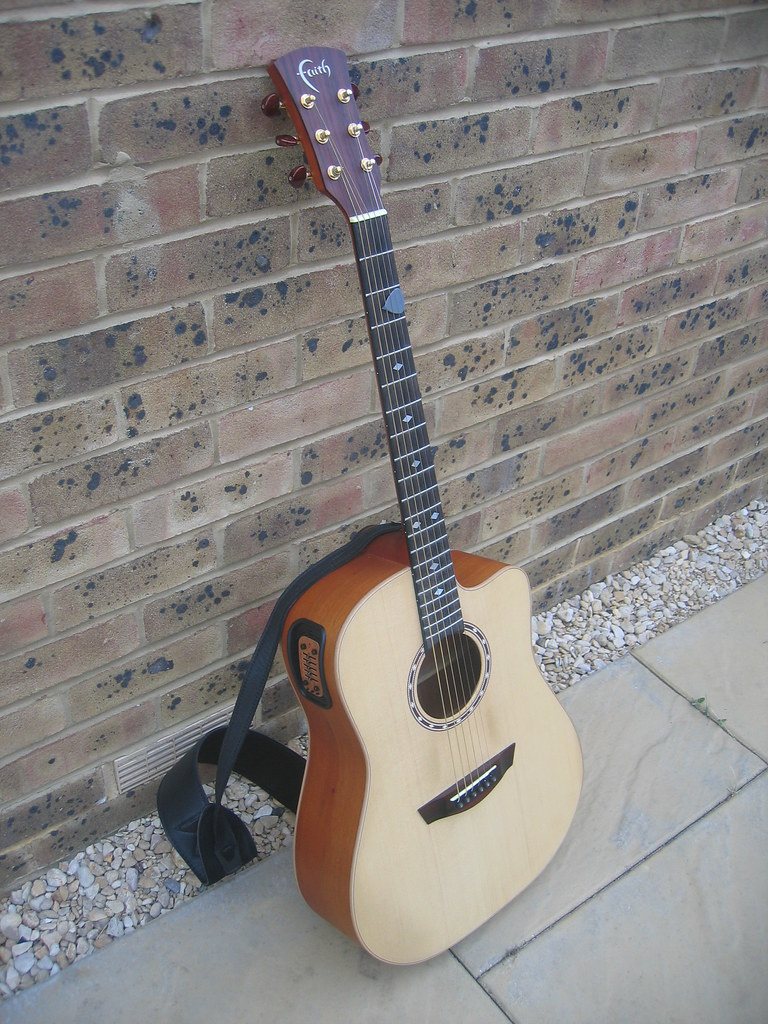
A standard acoustic guitar is often enough when you are starting out. It gives you natural resonance and an immediate sound, ideal at home or with friends.
Benefits of Amplification for Stage and Studio
An electro-acoustic model includes a pickup and preamp. That makes it easier to connect to a PA system and record in a studio.
The versatility of an amplified model lets you explore more sounds without adding much gear. However, a poorly built instrument will still sound limited, even with electronics.
“Prioritize build quality over built-in electronics, especially for a first guitar.”
- Acoustic: natural resonance, simple use.
- Electro-acoustic: direct connection, stage options.
- Alternative: add a pickup later if needed.
| Strength | Acoustic | Electro-Acoustic | Recommendation |
|---|---|---|---|
| Use | Home, rehearsals | Stage, recording | Beginners: choose a quality acoustic first |
| Versatility | Natural tone | Amplification and tone shaping | Choose according to your musical project |
| Budget | Prioritize build quality | Extra cost for electronics | Compare ranges and prices |
For a clear comparison of beginner options, read this guide to acoustic and electric guitars for beginners.
Matching Your Choice to Your Budget and Goals
A good balance between budget and goals gives you a better first experience with your instrument.
Start by setting a realistic range. A budget between $170 and $350 can often buy a reliable first folk guitar. Avoid very cheap models that make playing harder and reduce motivation.
If you plan to perform, look for stable or electro-acoustic models from trusted ranges. If your goal is home practice, a well-built acoustic guitar is enough and often gives you better natural tone for the money.
Choose a solid top when the price allows: it improves projection and tonal richness. Take time to compare several formats and models in store.
“Spending a little more at the start can prevent you from outgrowing the instrument too quickly.”
| Budget | Recommended Type | Strength |
|---|---|---|
| $170-$350 | Folk guitar without electronics | Better wood and finish for the price |
| $350-$650 | Acoustic / electro-acoustic guitars | Solid top, stage versatility |
| $650+ | Higher-end models | Better build quality, longevity |
Essential Accessories for Learning Comfortably
To make steady progress, add a few essentials when you buy your first model.
A reliable tuner keeps the instrument accurate and protects a beginner’s ear. It prevents bad habits and makes chord practice more satisfying.
A gig bag or case protects the guitar during transport and temperature changes. It is a simple investment that extends the life of the instrument.
Picks let you vary your attack and explore new textures. A capo makes some chords more accessible and opens up other keys.
Add a strap if you play standing up, a footrest for posture if needed, and a stable stand so the guitar stays ready to play. Changing strings regularly keeps tone and playability fresh.
“A small, well-chosen accessory budget supports calmer and more consistent practice.”

| Accessory | Role | Typical Price |
|---|---|---|
| Tuner | Fast and reliable tuning | $15-$50 |
| Gig bag / case | Protection and transport | $20-$90 |
| Picks & capo | Techniques and keys | $5-$35 |
| Strap / footrest / stand | Comfort and accessibility | $10-$70 |
| String set | Tone and maintenance | $8-$25 |
Conclusion
The right final choice depends as much on feel as it does on measurable technical criteria.
Choosing a first guitar directly affects your enjoyment and consistency. Playing comfort and build quality remain the foundations of faster progress.
This guide gives you the keys to evaluate body shape, format, and budget. Take time to try several models in store and notice how the instrument feels in your hands.
For another beginner-focused comparison, review these first guitar buying tips. Investing in good guitars leads to more motivating sessions and more durable progress.
FAQ
What is the difference between a steel-string acoustic guitar and a nylon-string classical guitar?
Should beginners prefer a specific body shape, such as dreadnought, auditorium, or jumbo?
Is string action important when learning?
What type of neck is best for a beginner?
Is it useful to buy an electro-acoustic guitar from the start?
What budget should I plan for a reliable first guitar?
Are steel strings painful for beginners?
How should I choose a guitar in store if I am a beginner?
Which accessories are essential for faster progress?
Should I prioritize a solid top for better sound?
How do I match the instrument to my style, such as chords, fingerstyle, or strumming?
Is it important to check electronics on an electro-acoustic guitar?
Can beginners find good used guitars?
Which brands are recommended for a reliable first guitar?
How long does it take to feel real progress with a good instrument?
Related Mountain Men guides
- Which Folk Guitar Should You Choose to Learn Easily
- Folk Guitar Strap: How to Choose and Install It
- Tuning a Folk Guitar: A Simple Method for Beginners
- Best Beginner Folk Guitar: Key Criteria to Know
- Folk Guitar: How to Start Well Without Making the Wrong Choice
- Folk or Classical Guitar: What Are the Differences for Playing Folk?
Leave a Reply