
Start in the right conditions: choose a Beatles song or another song you love, then take a few minutes to get to know your new instrument. This small ritual links practice with enjoyment and can help you stay consistent.
This practical guide helps you choose a first model suited to your style and body shape. A well-set-up folk guitar, with steel strings and a comfortable neck, delivers a clear, powerful sound for accompanying many songs.
We cover the essential steps for getting started on guitar: choosing the instrument, basic chords, first techniques, and a progression plan suited to your level. With regular practice, you will soon be able to accompany simple songs.
If you are still unsure, read this beginner’s guide, which presents different models and offers advice to avoid common mistakes. The idea is simple: take the time to choose well and preserve the pleasure of playing.
Why Choose a Folk Guitar to Start With?
Choosing a folk guitar gives you access to a vast repertoire: chanson, folk, pop, acoustic rock, blues, or country. Its resonant body is enough to play without amplification, which makes practicing at home or with friends easier.
The folk guitar combines the acoustic character of a wooden body with the brightness and projection of steel strings. It works just as well for rhythmic accompaniment as for arpeggios, provided you choose a comfortable, properly set-up instrument.
For someone hesitating between several types of guitars, trying them in a store remains decisive. Immediate enjoyment does not depend only on the category of instrument: the body size, neck profile, string height, and musical style you are aiming for matter just as much.
- Versatility: it lets you explore many styles.
- Independence: it can be played without an amp or electrical power.
- Progression: the basics you learn can later be transferred to an electric or classical guitar, even though the playing feel is different.
| Criterion | Folk guitar | Electric guitar |
|---|---|---|
| Sound without amplification | Projected naturally by the body | Low, because an amp is generally needed |
| Feel under the fingers | Firmer steel strings | Often softer strings and sometimes lower action |
| Common uses | Accompaniment, arpeggios, chanson, folk, and pop | Rock, blues, pop, effects, and amplified playing |
To explore your choice further and compare models, read this detailed guide, which helps you select an instrument according to your budget, body shape, and goals.
Understanding the Strengths of the Folk Guitar
Choosing a suitable instrument directly affects comfort and consistency in learning.
Thanks to its steel strings, the folk guitar generally produces a bright tone and generous projection. It easily accompanies chanson, pop, folk, or acoustic rock, without requiring you to change instruments.
Its neck is often narrower than that of a classical guitar, but comfort also depends on its profile and the size of your hands. The tension of steel strings requires an adjustment period: it does not make you progress faster on its own, but a careful setup can make the first few weeks much more pleasant.

The Benefits of Versatility
Switching between styles can make every practice session more motivating. You can move from simple pick accompaniment to fingerplayed arpeggios, then gradually work on more demanding techniques such as fingerpicking.
The Differences from Classical Guitar
The main difference lies in the strings and construction. The steel strings and body of a folk guitar generally produce more brightness and projection, while the nylon strings of a classical guitar offer a softer attack and a rounder tone. The electric guitar, meanwhile, relies mainly on its pickups and amplification.
| Characteristic | Folk guitar | Classical guitar |
|---|---|---|
| Strings | Steel, often bright tone | Nylon, generally rounder tone |
| Neck | Often narrower | Wider, with more space between the strings |
| Common repertoire | Chanson, folk, pop, acoustic rock, blues | Classical, flamenco, accompaniment, and varied repertoires |
To compare models and playing feel, read this analysis dedicated to choosing between folk or classical guitar, then continue with the selection criteria below.
The Essential Criteria for Choosing Your First Instrument
Choosing a first guitar is based on practical and ergonomic criteria. A model suited to your body shape, budget, and repertoire helps you stay motivated during the first few months.
The Importance of a Setup by a Luthier
Having your instrument checked by a luthier or qualified technician can be worth the investment. The price depends on the instrument and the work required, but a good setup often clearly improves playing comfort.
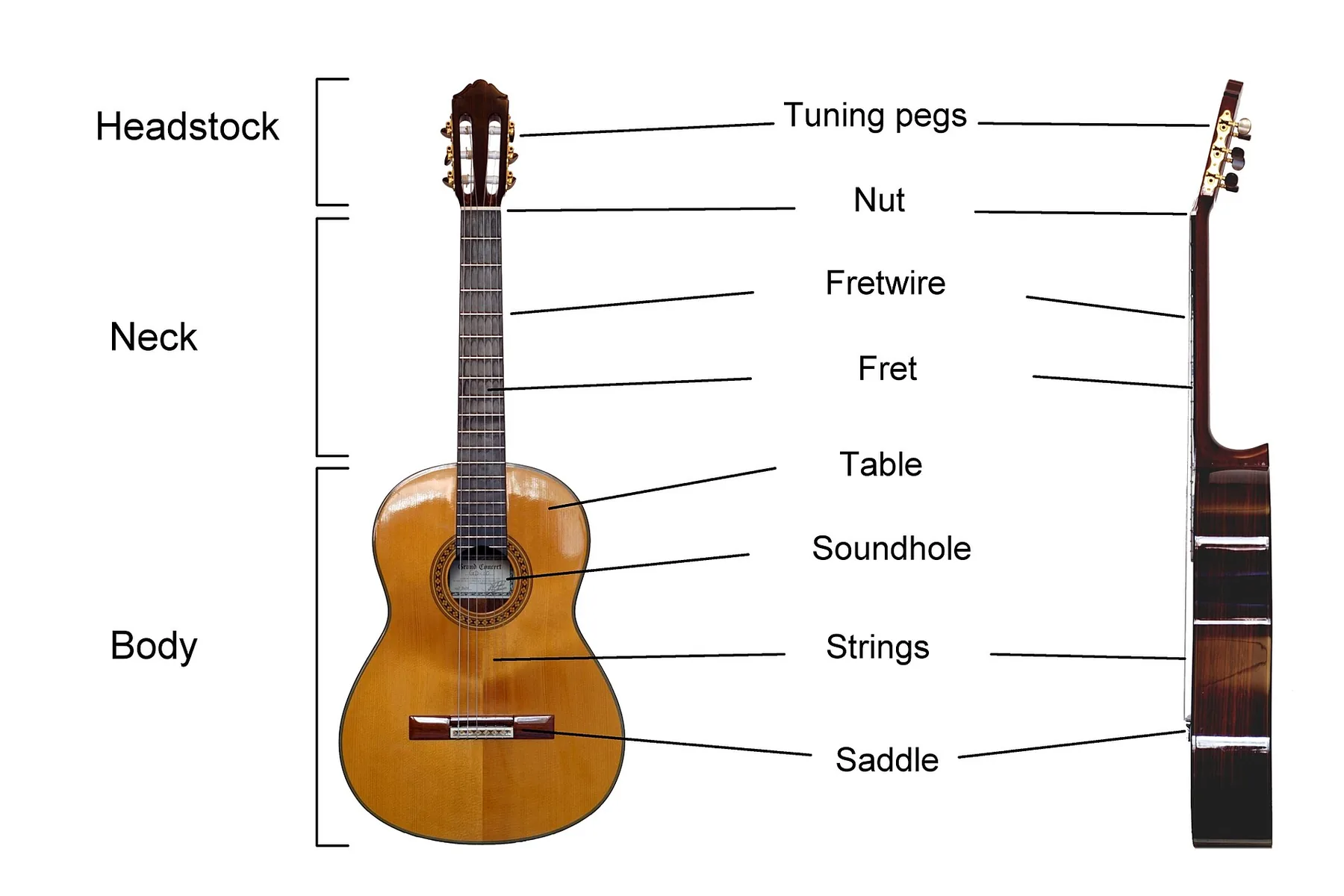
The professional can check the neck relief, string height, condition of the nut and saddle, and intonation in particular. A reasonably low action reduces the effort required from your fingers without causing excessive fret buzz.
Also take your body shape into account. A small concert or auditorium body can be more comfortable than a large dreadnought, while the wider neck of a classical guitar suits some hands better than others.
- An electric guitar generally requires an amp and a cable: include them in the budget.
- Compare several formats and ask for advice before buying.
- A professional setup can make an entry-level model much more pleasant, though it cannot correct major manufacturing defects.
Adopt a Comfortable Playing Posture
A stable posture encourages precision and limits unnecessary tension.
When seated, rest the guitar on your right thigh if you are right-handed and use the common position, or on your left thigh if you prefer a posture closer to classical guitar. A left-handed player can reverse these reference points depending on the instrument.
Angle the neck slightly upward and keep your shoulders relaxed. The wrist of the hand pressing the strings should remain as natural as possible; avoid gripping the neck tightly or moving the elbow excessively away from the body.
To play standing up, use a strap adjusted to a height that lets you keep a position close to the one you use when seated. A footrest or ergonomic support can also stabilize the instrument.
| Situation | Advantage | Advice |
|---|---|---|
| Seated, guitar on the thigh | Stability and consistent reference points | Keep your back straight without stiffening it |
| Standing, with a strap | Mobility | Adjust the height to avoid bending your wrists sharply |
| Classical position | Higher neck and easier access to the upper frets | Use a footrest or suitable support if needed |
- Keep your head aligned with your back and avoid constantly leaning toward the fretboard.
- Adjust the angle of the neck to make the work of the left or right hand easier, depending on your handedness.
- Take the time to find a stable position: comfort matters more than copying a posture exactly.
Master Basic Chords to Make Progress
A few open chords are enough to start accompanying many songs.
Work first on C, D, E, G, and A, as well as their most common minor forms. Learn each position slowly, then practice moving from one chord to another without interrupting the rhythm.
Following a structured guitar lesson helps you spot placement mistakes. Daily practice of 10 to 20 minutes can be more effective than one long, irregular session, provided you stay relaxed and attentive to sound quality.

- Start with open chords, then move on to barre chords once transitions become smoother.
- Play each string separately to check that no note is muted.
- Use a metronome at a slow tempo to stabilize the rhythm before speeding up.
| Exercise | Suggested duration | Goal |
|---|---|---|
| Chord placement | 5 to 10 minutes | Get clear notes and memorize positions |
| Transitions between two chords | 5 to 10 minutes | Change position without losing the tempo |
| Accompanying a song | Depending on your availability | Connect technique with musical enjoyment |
To explore this work further, read this guide on how to learn chords and make steady progress.
Learn Pick and Fingerstyle Playing Techniques
The techniques of the hand that plucks or strikes the strings, with a pick or with the fingers, shape the sound, rhythm, and playing comfort. They allow you to accompany varied songs and gradually refine your style.
Fingerpicking
Fingerpicking consists of distributing the strings between the thumb and the other fingers in order to bring out a bass line, an accompaniment, and sometimes a melody. Marcel Dadi played a major role in making this approach known in France.
Tommy Emmanuel illustrates, at a virtuoso level, the orchestral richness that a single guitar played with the fingers can produce.
Strumming
Strumming, or playing rhythm chords, develops rhythmic consistency and the energy of the piece. A pick makes it easier to get an even attack, but it is also possible to strum the strings with your fingers.
Start with simple down and up movements, then gradually add accents, rests, and dynamic variations.
Reading Tablature
Tablature indicates the strings and frets to play. It gives quick access to many songs, but it does not always specify the rhythm: listen to the recording or use rhythmic notation as a complement.
- Study performances by Marcel Dadi to observe the link between technique and musicality.
- Alternate between pick and fingerstyle playing to discover the sensations that suit you.
- Progress from simple patterns toward arpeggios and more complex accompaniments.
Explore Modern Percussive Sounds
Percussive techniques use the body, strings, and neck to enrich the rhythm.
In “Drifting,” Andy McKee combines tapping, harmonics, and percussive strikes. John Butler and Marcin also show how far an acoustic guitar can become melodic, harmonic, and rhythmic all at once.
These gestures can bring a pop, rock, or contemporary color to your songs. However, they require good rhythmic control and precise control of the force applied: strike without brutality so you do not damage the instrument.
- Coordination: combining notes, chords, and percussion on a single guitar.
- Variety: enriching an arrangement without adding another instrument.
- Progression: starting with a simple tap before incorporating tapping and harmonics.
Tip: watch slow-motion demonstrations and progress step by step. These techniques are spectacular, but they do not replace work on tempo, precision, and musicality.
Maintain Your Instrument to Extend Its Lifespan
Regular maintenance preserves playing comfort and the stability of the instrument. Wipe the strings with a clean cloth after each session to limit deposits and oxidation.
Change the strings when they become dull, rough, difficult to tune, or visibly corroded. Their lifespan varies depending on how often you play, perspiration, climate, and playing style.
Also watch for unusual changes in string height, persistent fret buzz, or visible deformation. If you have any doubts about the neck, bridge, or soundboard, consult a professional rather than attempting a risky adjustment.
Store the guitar in a suitable case or gig bag, away from heat sources, direct sunlight, and extreme humidity changes. A humidifier can be useful in a very dry environment, provided you follow the manufacturer’s recommendations.
- Cleaning: wipe with a soft cloth after each use.
- Inspection: regularly check the strings, neck, bridge, and soundboard.
- Prevention: use a suitable case and maintain reasonably stable humidity.
This maintenance guide details the main steps. For work on the neck, nut, saddle, or bridge, a luthier’s advice remains preferable.
Avoid Common Mistakes Made by Beginner Guitarists
Tenderness in the fingertips is common at the beginning, especially with steel strings. The adjustment period varies from one person to another: do not try to build calluses by forcing it or playing through sharp pain.
Favor short, regular sessions. Ten to twenty minutes of focused practice may be enough at first. Gradually increase the duration while keeping your shoulders, wrists, and hands relaxed.
Managing Fingertip Discomfort
- Do not press the strings harder than necessary: place your finger near the fret and look for the minimum pressure that produces a clear note.
- Steel strings often require more effort than nylon strings, but string gauge and guitar setup strongly influence the feel.
- In case of persistent, sharp, or joint pain, stop the session and check your posture before resuming.
- A teacher can quickly correct poor thumb, wrist, or shoulder position.
| Mistake | Possible consequence | Correction |
|---|---|---|
| Pressing too hard on the strings | Fatigue and unnecessary tension | Place the finger near the fret and gradually lighten the pressure |
| Excessively bent wrist | Discomfort and lack of mobility | Adjust the neck angle and thumb position |
| Sessions that are too long from the start | Pain and loss of motivation | Practice briefly, take breaks, and increase the duration gradually |
By avoiding these pitfalls, you will build stronger foundations and enjoy playing more. Patience and consistency remain the beginner guitarist’s best allies.
Conclusion
Getting started well on folk guitar depends on a few simple choices: a suitable instrument, a comfortable setup, a relaxed posture, and regular practice.
The folk guitar is versatile and rewarding, but it requires a short adjustment period to steel strings. Progress at your own pace, work on songs you enjoy, and alternate technical exercises with musical playing.
To identify other habits that can slow learning, read this article on common pitfalls. Then pick up your guitar, tune it, and begin with a few minutes of focused practice.
Leave a Reply