
The capo is a simple accessory that changes musicians’ lives. It virtually moves the nut and changes the key without having to memorize complex chords.
Placed correctly on a fret, this small tool lets you adapt a song to your vocal range. A beginner guitarist therefore gains comfort and speed.
In this article, we will explain positioning tips, the impact on chords, and the criteria for choosing one according to the neck.
Key advantage: a properly positioned capo makes difficult chords more accessible and opens up new composition possibilities.
Whether you are a fan of folk music or another style, this guide offers clear, practical advice to help you progress.
Understanding the Role of the Capo on Folk Guitar
The capo changes the vibrating length of the strings and instantly transposes a piece. By placing the tool at the 2nd fret, you shift the open strings and get a new key without changing standard tuning.
The word comes from the Italian capotasto, meaning nut: it therefore acts as a movable nut. This allows you to play higher notes without changing your usual chord positions.
Unlike a classical guitar, the neck radius of a folk guitar requires a suitable accessory. Precise placement, just behind the fret, prevents buzzing and ensures that the notes sound good.
In some cases, this accessory becomes essential for achieving a specific sound.
- Acts as a movable nut and changes the vibrating length.
- Allows you to change key without changing the tuning.
- Available in specific or versatile models depending on the instrument.
| Type | Advantage | Ideal for |
|---|---|---|
| Spring-loaded | Quick installation | Playing standing up, frequent changes |
| Strap system | Even pressure | Necks with a pronounced radius |
| Specialized for folk guitar | Adapted to the radius, precise sound | Folk guitar and studio arrangements |
To learn more about its origin and use, see this article.
Folk Guitar Capo: How to Use It Properly Every Day
Placing a capo just behind a fret prevents buzzing and ensures even pressure on all the strings. This simple gesture preserves the instrument’s intonation and tone.
The Basics of Placement
Place the tool immediately behind the fret, without tightening it excessively. Then check each string by strumming the six strings one by one.
- Even pressure: it prevents muted notes.
- Closeness to the fret: it reduces the tension required.
- Tuning check: make slight adjustments if needed.
Adapting Vocal Pitch
Moving the capo along the neck changes the key of a piece. The singer can therefore find a comfortable vocal range without changing their usual open chords.
Practical advantage: you simplify complex pieces and reduce the use of barre chords. This also frees up fingers to enrich a melodic line.
Transposition becomes instant: each capo position raises the overall pitch by one semitone per fret.
To learn more about accessories and choose according to your needs, see this accessory guide.
The Main Benefits for Guitarists
The capo instantly transforms playing by making positions more accessible. It helps the musician play demanding pieces without having to master every barre chord.
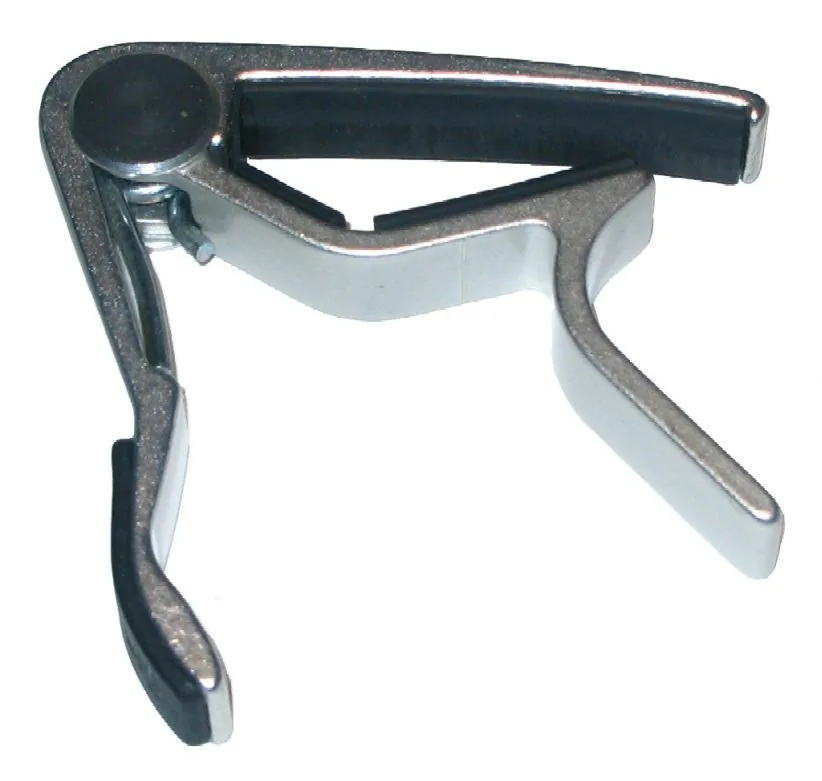
Guitarists use the capo to replace difficult barre chords with open shapes. This preserves the natural resonance of the strings and improves note sustain.
By avoiding barre chords, the guitarist can focus on rhythmic precision and vocal accompaniment. It also makes it easier to explore new keys without retuning.
- More clarity: each chord sounds cleaner.
- Quick transposition: you change key fret by fret.
- Accessibility: ideal for beginners and experienced players alike.
Using a capo well enriches the music and expands the range of sounds available.
Choosing the Right Model for Your Instrument
Selecting a model depends on the neck radius, the style played, and how often it will be used.
Spring-Loaded Models
Quick to put on, these tools clip on in a single motion. Storing them on the headstock makes frequent changes easier during concerts.
Example: the Dunlop 11FD is appreciated for its ease of use and secure hold.
Strap Systems
They offer adjustable pressure and suit necks with a pronounced radius.
Tip: adjust the tension to avoid muted notes.
Specialized Capos
Some models handle each string separately. The Creative Tunings Spider Capo opens up new creative possibilities.
These specialized capos allow you to press down some strings while leaving others open to create unique textures.
- Choose according to the instrument: folk or classical.
- Consider the radius and the space the model takes up on the headstock.
- Read several specialized articles before buying.
| Model | Advantage | Ideal for |
|---|---|---|
| Spring-loaded (Dunlop 11FD) | Quick placement, good hold | Concerts, fast changes |
| Strap system | Adjustable pressure | Necks with a pronounced radius |
| Specialized (Spider Capo) | String-by-string control | Creative experimentation, arrangements |
Positioning Techniques on the Neck
Precise capo placement completely changes string response and note intonation.
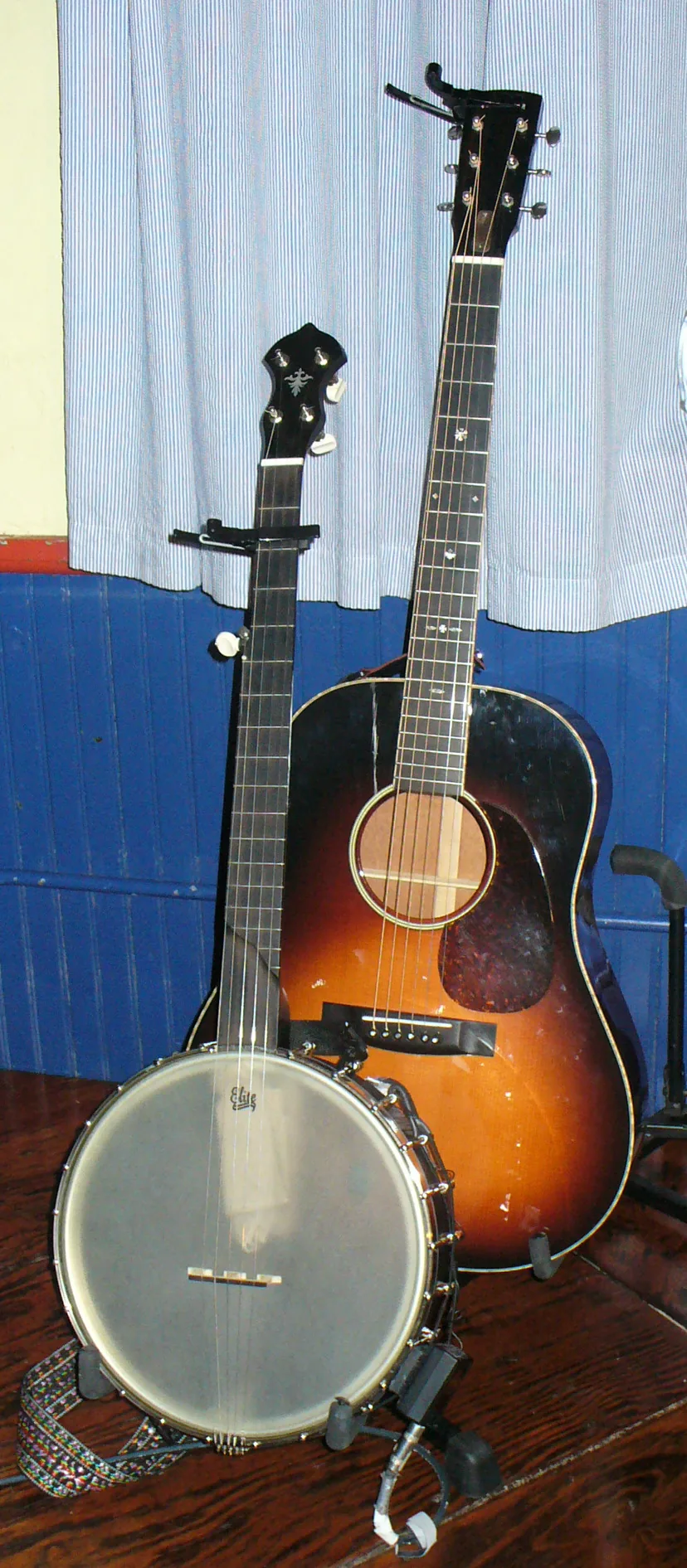
Place the tool just behind the fret, not on top of it. This position prevents buzzing and ensures that each string vibrates freely.
Placing the capo at the 2nd fret produces an immediate transposition of the notes played. Each additional fret raises the pitch by one semitone.
On folk instruments, the capo must follow the curve of the neck. Even pressure keeps the guitar in tune without crushing the tone.
Tip: the pressure should be sufficient without being excessive so the tuning is not thrown off.
Quick summary:
| Action | Goal | Result |
|---|---|---|
| Place behind the fret | Avoid buzzing | Clear notes, stable tuning |
| Place at the 2nd fret | Transpose by one whole tone | Higher notes |
| Follow the curve | Even pressure | Optimal string resonance |
To learn more about how it works and choose the right position according to your chords, see this capo guide.
Transposing Your Favorite Songs
Adapting a song to a new vocal range becomes simple when you know how to calculate the fret shift. This method lets you keep your open chord shapes and change the pitch without relearning an entire arrangement.

Method for Calculating the Shift
Step 1: identify the original key and the one desired by the singer.
Step 2: count the number of semitones between the two keys. Each fret on the neck equals one semitone.
- Example: placing the capo at the 2nd fret turns a C major chord into D major.
- A song like Wonderwall uses this principle to achieve a specific sound.
Transposition allows you to play your familiar chords while changing the resonance of the open strings.
| Action | Goal | Result |
|---|---|---|
| Move up 1 fret | Raise by one semitone | Higher chord |
| Move up 2 frets | Raise by one whole tone | C -> D (example) |
| Check the fret | Avoid buzzing | Clean notes, stable tuning |
To go further: practice with transposed chord charts to progress quickly and accompany your singers better.
Tips for Long-Lasting Maintenance
A few maintenance habits are enough to preserve pressure on the strings and tuning stability.
Clean your capo regularly with a soft cloth to prevent dust from building up on the pads. Also check the condition of the rubber that touches the strings.
Check the tension of the spring or screw before each session. Even pressure prevents buzzing and protects the neck.
Do not leave the accessory on the guitar when you do not need it. Store it in a case instead to avoid scratches and impacts on the instrument.
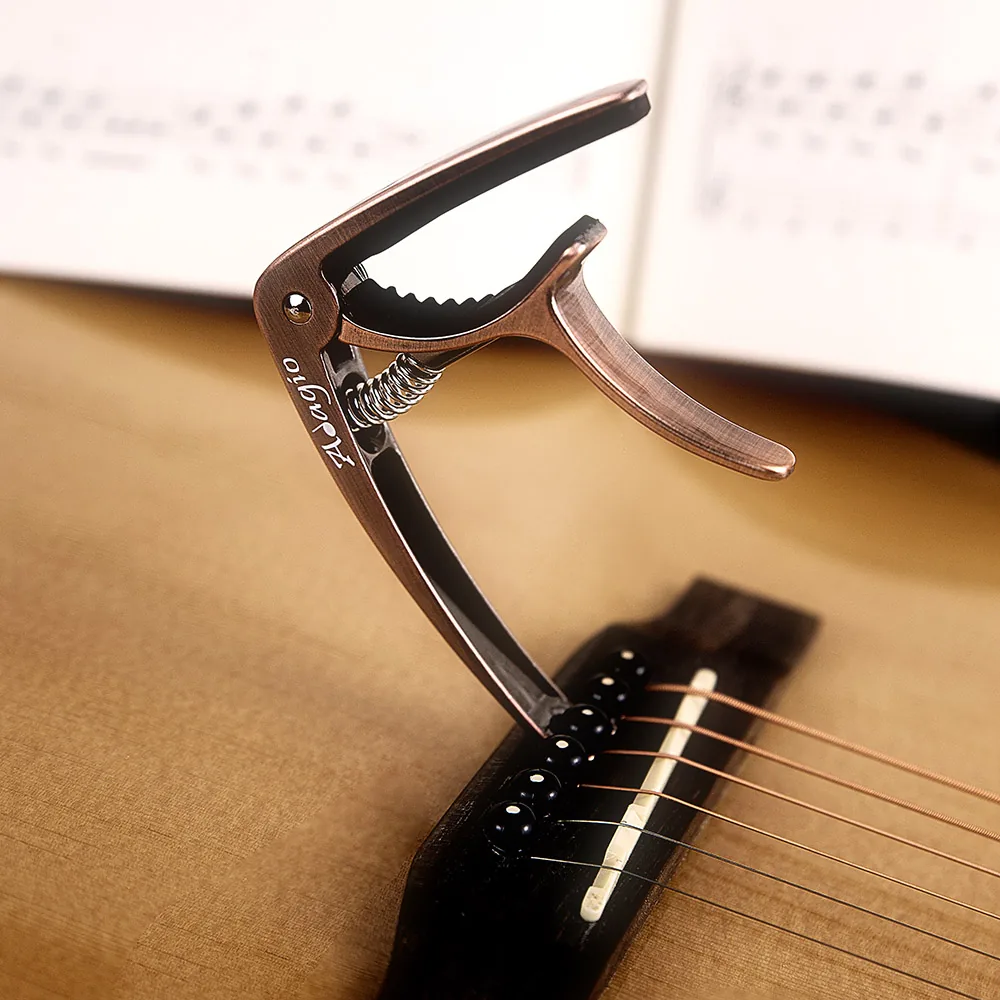
Treat your capo with the same care as your instrument: this reduces the risk of throwing the tuning out.
- Cleaning: soft cloth.
- Check: spring, screw, and rubber.
- Storage: protected case.
| Action | Why | Frequency |
|---|---|---|
| Clean the pads | Prevent dust buildup | After each intensive use |
| Check the tension | Ensure even pressure on the strings | Before concerts or sessions |
| Check the rubber | Prevent wear from contact with the strings | Once a month |
If in doubt, consult specialized articles. Simple maintenance reduces the need to replace parts and extends the capo’s lifespan.
Conclusion
Ultimately, a simple device placed on the neck can open up new harmonic colors.
The capo is a valuable accessory for guitarists who want to enrich their playing. It simplifies barre chords and makes it easier to accompany a song.
Experiment with different positions on the neck: this helps find the singer’s ideal vocal range and discover new sounds.
To go further with essential accessories and choose the right equipment, see this article: essential accessories.
In summary: regularly include this simple gesture in your practice. Guitarists gain inspiration and adapt more quickly.
Leave a Reply